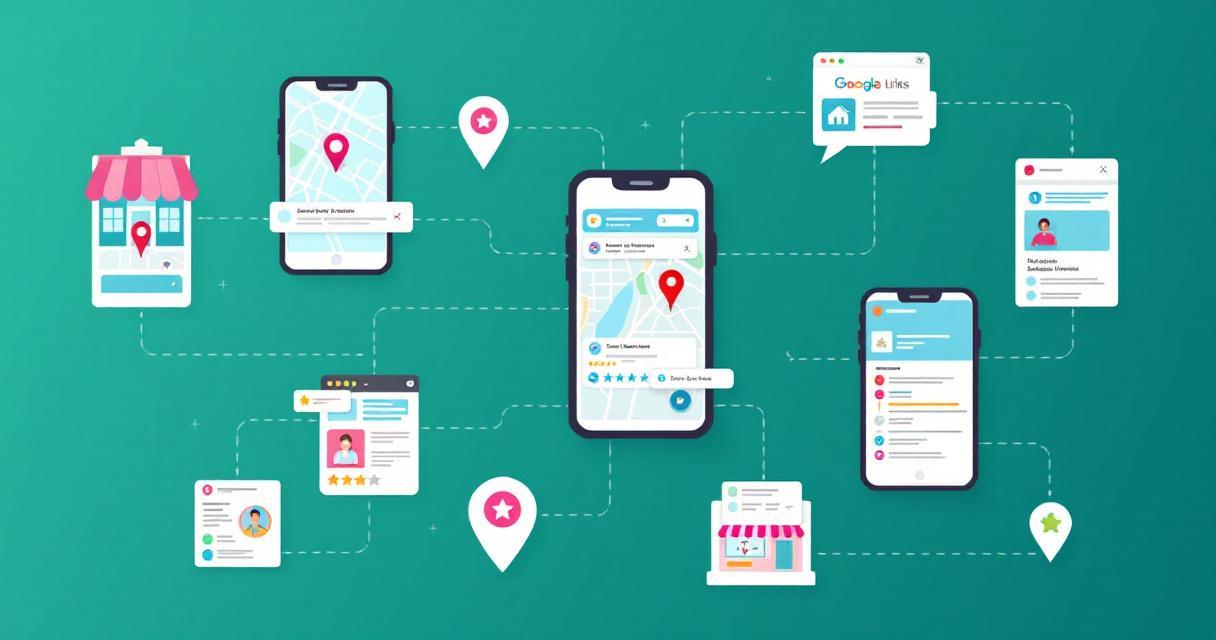
When someone in your town searches for your industry, are you first? Or are you somewhere on page three, behind less capable competitors with a stronger online presence?
What local SEO is
Local SEO means optimising your online presence for location-based searches. When someone Googles “plumber Waidhofen” or “hairdresser near me”, local SEO determines whether you appear — and in which position.
The difference from standard SEO: this is not about ranking nationwide. It is about being easy to find within your service area. And for many local businesses, that matters more than visibility beyond their region.
The three pillars of local SEO
- Google Business Profile. Your Google Business listing is the foundation. Name, address, phone number, opening hours, photos, reviews — everything must be current and complete.
- A website with local content. Your website must clearly signal where you work. Place names in your copy, on the homepage and in metadata. Google needs to understand that you are a local provider.
- Reviews and mentions. The more positive reviews you have, and the more often your business is mentioned on other websites, the more relevant you become to Google.
Why Google Business Profile matters so much
When someone runs a local search, Google first shows the Map Pack — three listings with a map, reviews and contact details. These three places receive most clicks. And they depend heavily on your Google Business Profile.
Without a complete, optimised Business Profile, you rarely appear in the Map Pack. It is that simple. And if you do not appear there, you do not exist for the searching customer.
Local content on your website
Your website should not just describe your offering in general terms. It should make clear where you work. “We are your plumber in the district of Waidhofen an der Thaya” is better than “We are a plumbing company”. The first is a local signal Google understands.
If you work in several towns, separate pages for each location may make sense. A page for “plumber Waidhofen” and another for “plumber Zwettl” — each with its own content, not just copied text with the place name replaced.
Local SEO is not a marathon. Many local businesses have done so little online that the basics alone can put you ahead.
Reviews make a powerful difference
Reviews strongly influence local search results. Not just their number, but also how recent they are and the responses to them. Google sees that a business regularly receives positive reviews and replies. That is a strong signal of trust.
Actively ask satisfied customers for a review. Not pushily, but consistently. A QR code on your business card, a link in your email signature or a friendly reminder after completing a project is usually enough.
The time factor
Local SEO does not work overnight. Google needs time to process your signals and understand your business. But it is considerably faster than SEO beyond your region. Many local markets have so little competition that a well-built website and maintained Google profile can give you good visibility.
Being easy to find is not an unrealistic goal. It is a concrete task with concrete steps. And the first step is knowing where you stand. Google your own company name. Google your industry plus your town. Then look at who ranks ahead of you — and why.
Sources & further reading
- WordStream: 101 SEO Stats 2026 Current SEO statistics and benchmarks for 2026
- SearchEngineJournal: Google Visibility Depends on AEO Why Answer Engine Optimisation is becoming crucial in 2026
- DemandSage: SEO Statistics 2026 A comprehensive collection of current SEO data and trends
- TryDecoding: 40+ Local SEO Stats 2026 46% of all Google searches have local intent
- Markterior: Local SEO Statistics 2026 The top 3 local results receive 70% of clicks