“An online shop? We are a trade business, not Amazon.” I hear this regularly, and I understand the objection. But the reality is different: tradespeople also lose customers if they cannot be found and ordered from online. The difference compared with the past: a professional shop does not have to be complicated.
Why tradespeople need a shop too
The days when trade businesses won customers purely through word of mouth and a local reputation are not over. But those methods are no longer enough. Your customers search online today. They compare. They order at weekends, at 10 pm, long after your office has closed.
An online shop is not a replacement for your core business. It is an extension. A way to sell accessories, offer spare parts or showcase products customers can order directly. It reduces the burden of phone enquiries on your team, including outside office hours.
- Available 24/7: Your shop is open around the clock — including weekends and public holidays
- Customers beyond your region: Sell throughout Austria, not just in your own district
- Fewer phone calls: Standard enquiries are handled directly online
- A professional presence: A shop signals competence and a modern approach
A practical example: a trade business with a large range
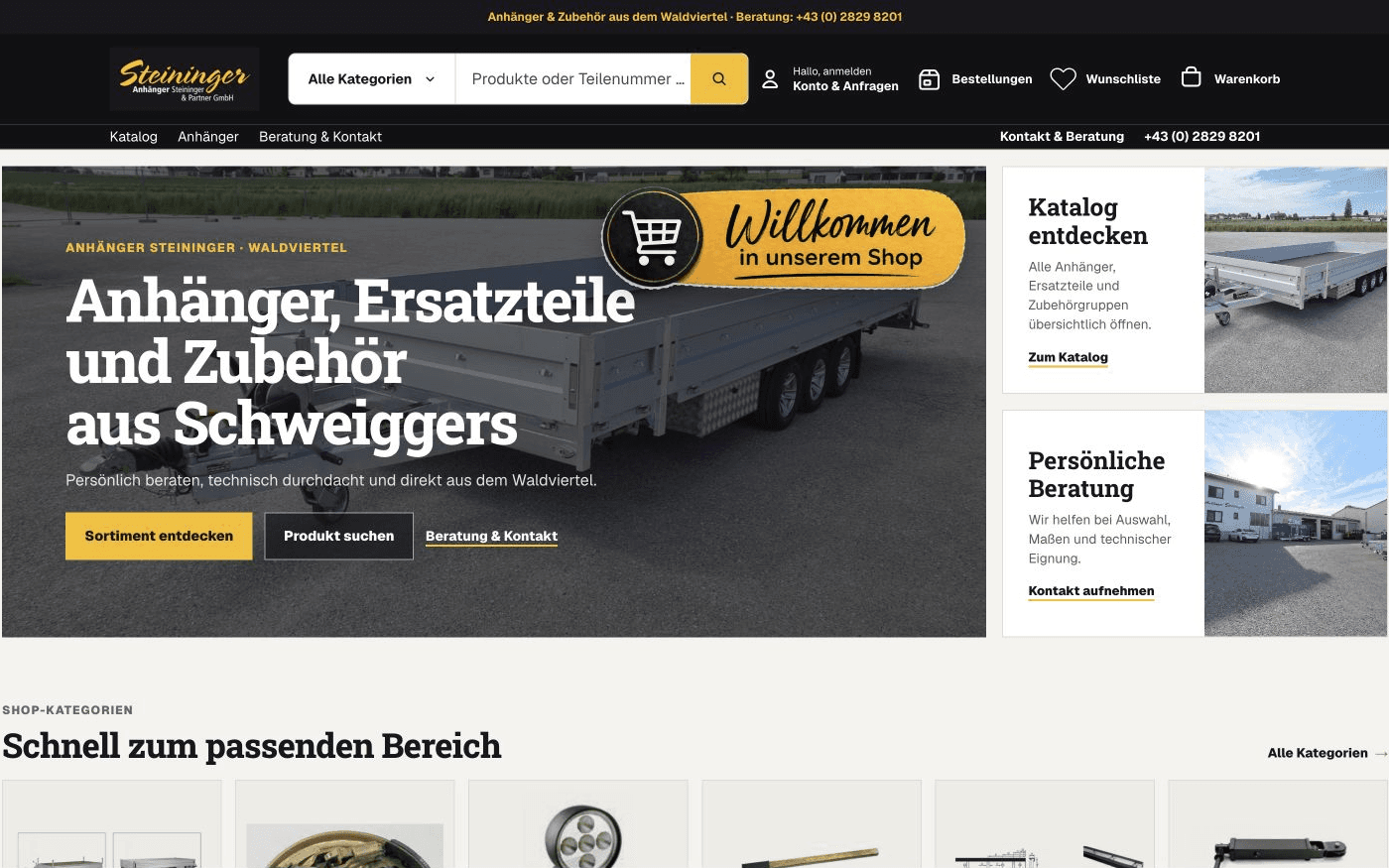
A trailer manufacturer from the Waldviertel — craftsmanship meets e-commerce
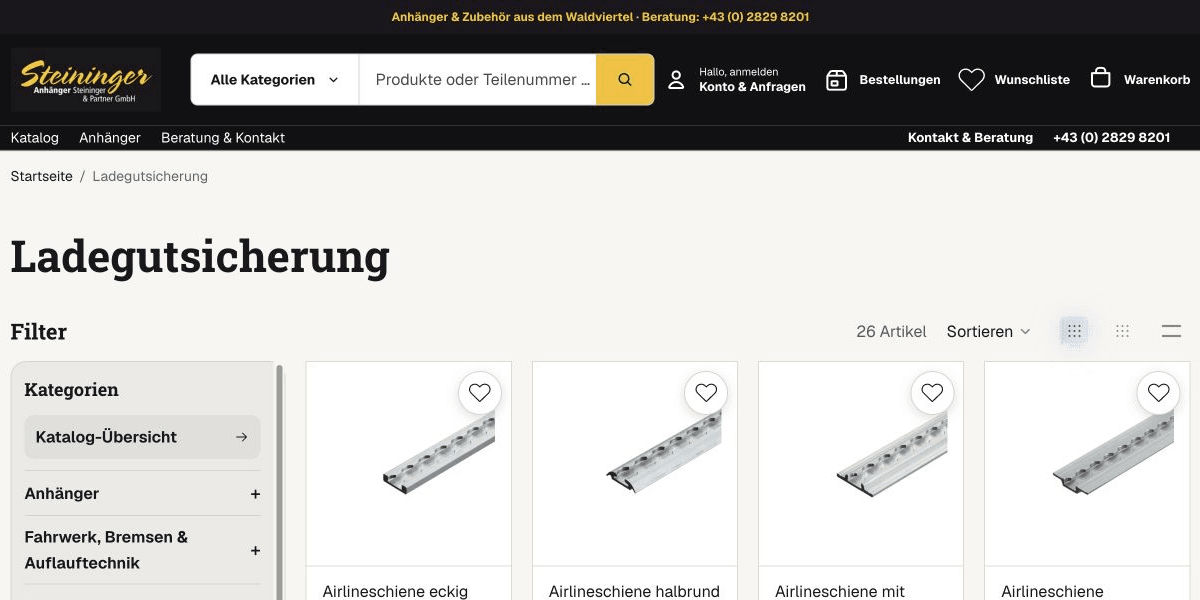
A trailer manufacturer from the Waldviertel with a large range. From tipping trailers and horse trailers to bespoke builds — everything searchable and filterable online. Customers find their trailer on screen instead of calling three times and waiting for a callback.
The aim: fewer phone enquiries about standard products and more time for enquiries about bespoke builds. A shop should run without anyone in the business needing IT expertise.
What a modern shop needs
An online shop for a trade business does not have to be a huge project. But some foundations must be right:
- A filterable product catalogue: Customers must quickly find what they need. Categories, search and filters are essential.
- Professional product photos: Quality matters in the trades. The photos need to show it too. Not a quick smartphone snap, but clear product images showing the details.
- Simple ordering: Basket, checkout, payment. All in a few clicks. Nobody wants to complete 10 forms.
- Payment methods: Credit card, PayPal, Klarna, bank transfer — more options mean fewer abandoned purchases.
- Mobile optimisation: A large share of shop visitors arrive on a phone. If your shop does not work on a smartphone, you lose the majority.
- Admin panel: You must be able to add products and change prices yourself without calling a developer.
What a shop costs
The effort depends heavily on the scope. An honest assessment:
- Small shop (up to 50 products): For businesses wanting to offer a manageable range online. Professional but compact.
- Medium shop (50–300 products): With filtering, categories and full functionality. The sweet spot for most trade businesses.
- Large shop (300+ products): With a configurator, product variant logic and specialist requirements. For businesses serious about selling online.
Ongoing hosting and any updates come on top.
A common mistake: tradespeople plan to build a shop “sometime” and keep putting it off. Competitors who have already done it welcome the extra customers.
The next step
Wondering whether an online shop makes sense for your business? Let us talk. In a short phone call, I can tell you what is realistic and what is needed.
Sources & further reading
- pressefeuer.at: The future of the trades in Austria 2026 233,500 trade businesses in Austria, 44,000 apprentices
- Handwerk & Bau: Automated demolition
- die-wirtschaft.at: SMEs are online but lack a plan 68% of the SMEs surveyed have no clear strategy for attracting new customers through search engines