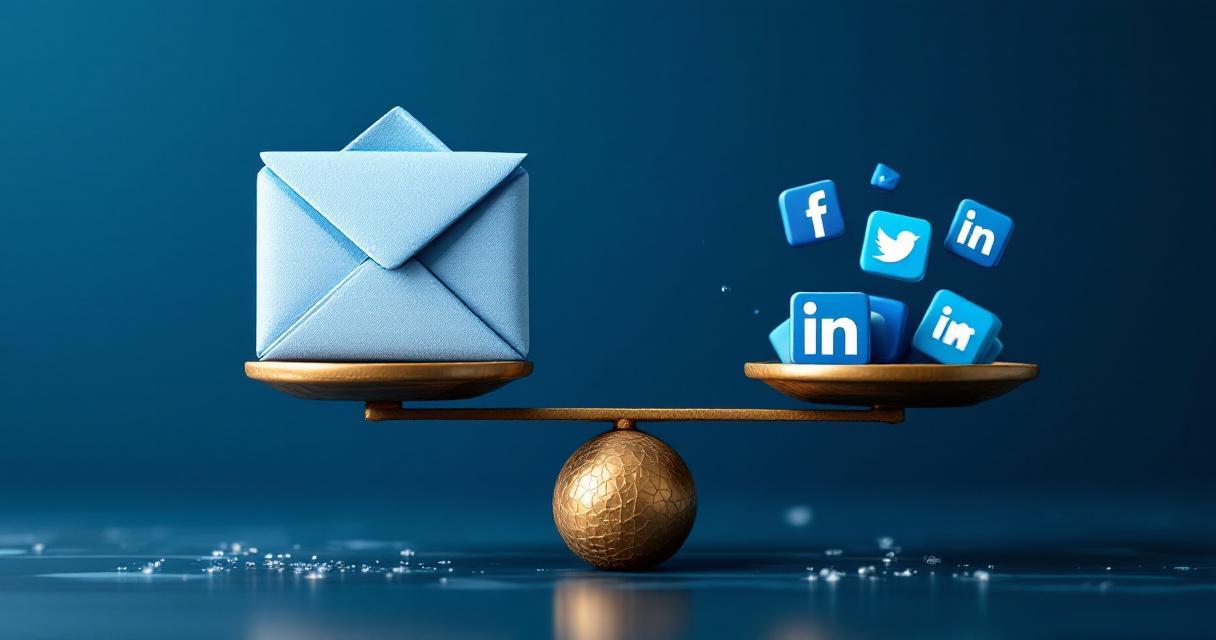
On social media, often only a small share of your followers see your post. A newsletter lands directly in their inbox. Notice the difference? Email marketing is a channel many underestimate.
Why email marketing still works in 2026
Every year, some marketing gurus announce: “Email is dead.” And every year, the figures prove otherwise. Email is a digital channel that puts you directly in your customer's inbox. No feed algorithm decides who sees your message. You write it, the recipient receives it — spam filters permitting.
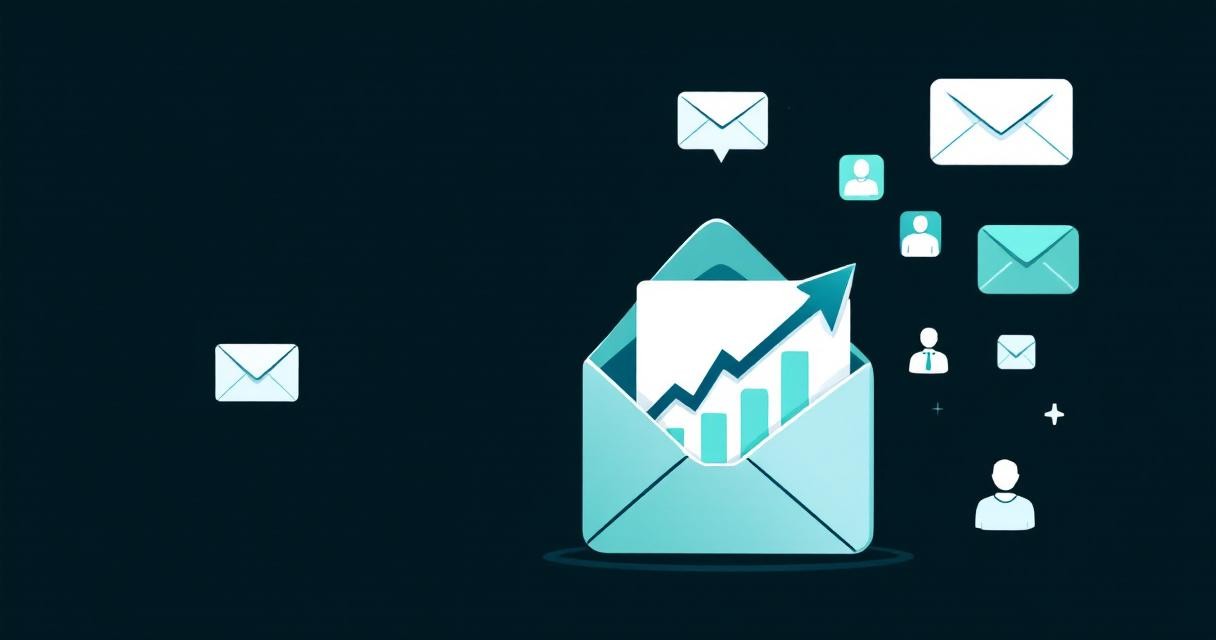
According to a Litmus survey of around 500 marketers (2025), almost two-thirds of respondents generate between 10 and 50 US dollars for every dollar invested in email marketing. This is a survey benchmark, not a promise for your business.
The reason is simple: anyone signing up for your newsletter has actively chosen to hear from you. These are not random followers who once clicked “Like”. They are people who gave you their email address — a real sign of trust in an age of spam and data protection.
What a good newsletter needs
Let me make one thing clear: a newsletter does not mean spam. The difference is simple: a good newsletter provides value. Spam provides only advertising.
What “value” means in practice depends on your industry:
- Tradespeople: Seasonal tips (heating maintenance in autumn, preparing the garden in spring), promotions, showcasing completed projects.
- Consultants and coaches: Short practical tips, case studies, invitations to workshops or webinars.
- Hospitality: Seasonal menus, events, vouchers for regular guests.
The golden rule: 80 per cent value, 20 per cent sales. If every newsletter only promotes your offer, nobody will read for long. But if you regularly provide useful content and occasionally include an offer, readers become customers.
A newsletter is not a monologue. It is a conversation with people who trust you. Treat it that way.
How to collect email addresses
This is where your website comes in. Without a website, you have no place to collect email addresses. Instagram and Facebook are not the right place to build an email list you own. But on your own website, you can:
- A sign-up form on the homepage: A simple field saying “Sign up for tips and news” — discreet, not intrusive, but visible.
- An exit popup: When someone is about to close the page, a brief “Want to stay up to date?” — it works better than you might think.
- Offer a free resource: A checklist, PDF guide or voucher — something valuable in exchange for an email address. A proven approach.
- After a purchase or enquiry: “May I keep you informed by email?” — existing customers usually say yes.
One important point: comply with the GDPR. Double opt-in is the usual standard in Austria because you need to prove consent. This means recipients must confirm their registration again through a confirmation email. It sounds cumbersome, but protects both you and your recipients.
Available tools — simply explained
You do not need a marketing degree to send a newsletter. Tools make it as easy as writing an email:
- Brevo (formerly Sendinblue): A European provider, GDPR-compliant. Good for getting started.
- Mailchimp: A widely used provider. Easy to use. Servers in the USA — look more closely at GDPR requirements.
- CleverReach: A German provider, GDPR-compliant, with good support in German.
All these tools offer ready-made templates, a visual editor for assembling your newsletter and automatic statistics: who opened it, who clicked and who unsubscribed. You can see what works at a glance.
Your website as the foundation
No website, no newsletter. Or more precisely: no website, no effective newsletter. A newsletter depends on being able to link to content. Blog articles, service pages, contact forms. And all of that lives on your website.
The ideal cycle looks like this: Website collects email addresses → newsletter provides value → newsletter links back to website → website generates enquiries. This is a system that reinforces itself. And the contacts belong to you — not to a platform or an algorithm.
Start small — but start
You do not need to send a newsletter every week straight away. Once a month is enough to begin with. Three short paragraphs, one useful tip, one link to your website. That takes 30 minutes and can bring new enquiries over the months.
If you need help setting it up, I will integrate the newsletter form directly into your website and show you how to send your first newsletter. It is not rocket science, I promise.
Sources & further reading
- Litmus: The ROI of Email Marketing Survey of marketers on returns from email marketing (2025)
- die-wirtschaft.at: SMEs are online but lack a plan 68% of the SMEs surveyed have no clear strategy for attracting new customers through search engines