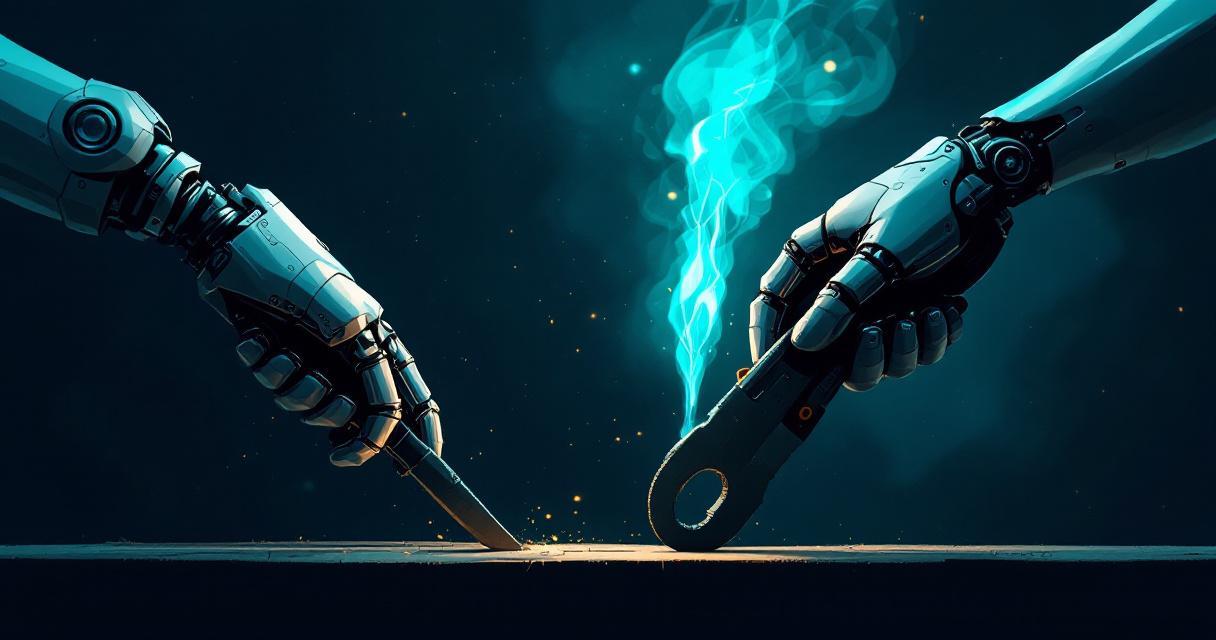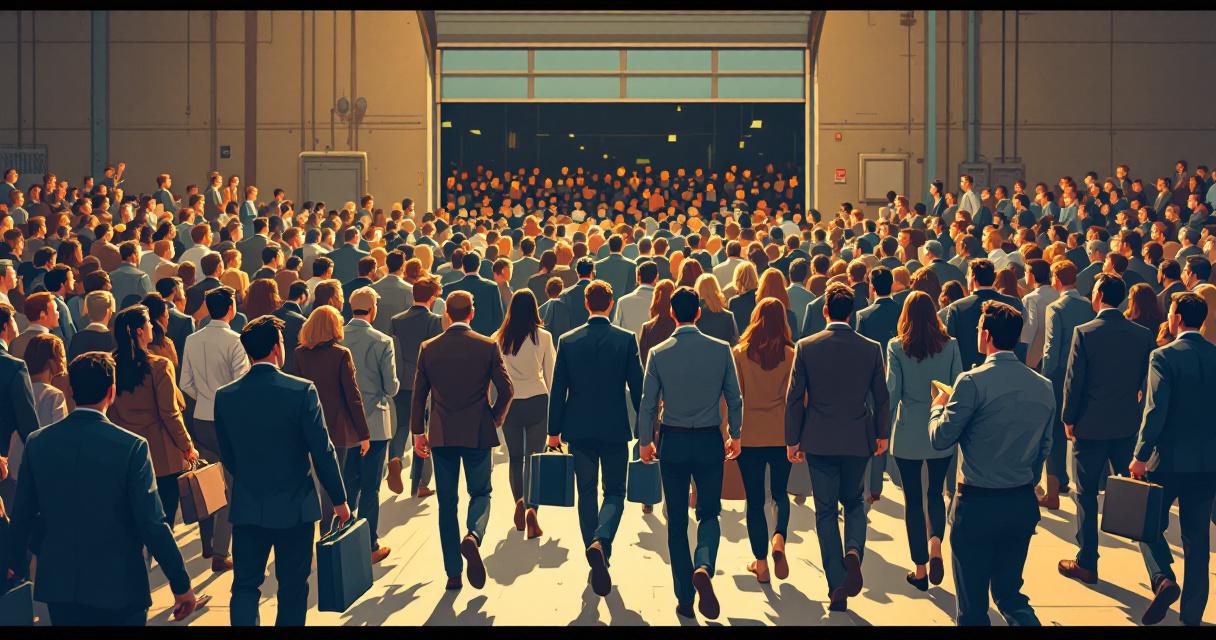
First, every trade business desperately searches for staff. Then hundreds of career changers suddenly arrive. Then comes oversupply. Competition becomes tougher. It is a possible scenario worth watching.
Phase 1: the skills shortage — the problem we all know
You know the situation. You have been advertising for months. No apprentice in sight. Your experienced staff retire and nobody new arrives. You have enough jobs, but nobody to do them. That has been the reality in Austria’s skilled trades for years.
Then comes the turning point. Not because more young people suddenly begin apprenticeships. Because people from completely different industries have no other choice.
Phase 2: the influx — when office workers become tradespeople
AI is changing office jobs faster than many expected. Administrators, bookkeepers, translators, graphic designers and copywriters: many occupations once considered secure are suddenly needed less. The people who worked in them have to find a new direction.
And where do they end up? In the skilled trades. Because there is work there. Because working with your hands creates something tangible. Because a robot cannot install a heating system — yet.
Does that sound positive? In the short term, yes. Finally, staff. Finally, relief. Finally, you can accept jobs you previously had to turn down.
The problem does not begin with the influx. It begins when the influx does not stop.
Phase 3: oversupply — when too many offer the same thing
Imagine there are suddenly twice as many decorating businesses in your region. Or three times as many electrician teams. Not because demand has increased, but because so many career changers have joined.
What happens to competition? Competition becomes tougher. Not immediately, but noticeably. New providers are hungry and want to win jobs.
- New sole traders also accept the small jobs you used to decline.
- Customers suddenly compare five quotes instead of two.
- Often, the deciding factor is the first impression rather than the quality of the work.
Phase 4: competitive pressure — when experience no longer stands out
You have 20 years of experience. You deliver quality. You stand behind your work. But the career changer three towns away advertises the same range of services, at least on paper. Customers see only the advert, not the experience behind it.
This is the moment that decides who survives and who does not. The better provider does not automatically win. The one who is visible does. The one who can show customers what makes their work different. The one who does not only do good work, but also communicates well.
What to take away from these four phases
You cannot stop this development. You cannot prevent AI from replacing office jobs. You cannot prevent career changers from entering the skilled trades. You cannot prevent customers from comparing prices.
But you can control how you position yourself.
- Build a brand: people who know and trust you look at more than the quote.
- Be visible online: when ten providers compete for a job, the winner is the one the customer finds first.
- Communicate quality: your work speaks for itself, but only if someone sees it. Photographs, reviews and references.
- Act now: not once prices have fallen. Now, while you can still build a head start.
The tradespeople who understand this now will still be here in five years
It sounds harsh, but it is the truth: not every trade business will survive this transition. Those who make it are not necessarily those doing good work. They are those who understood in time that good work alone is no longer enough.
You need visibility. You need a strategy. You need a plan that goes beyond word of mouth. Not tomorrow. Today.
Sources & further reading
- pressefeuer.at: The future of the skilled trades in Austria, 2026 233,500 skilled trade businesses in Austria and 44,000 apprentices
- Handwerk & Bau: Automated demolition An example of automation in demolition
- die-wirtschaft.at: SMEs present online but without a plan 68% of the SMEs surveyed have no clear strategy for acquiring customers through search engines